Lumens vs Beam Distance: Stop Buying Lights by Lumens Alone
Total output does not tell you where the light goes. Beam shape, intensity and sustained performance change which light suits each task.
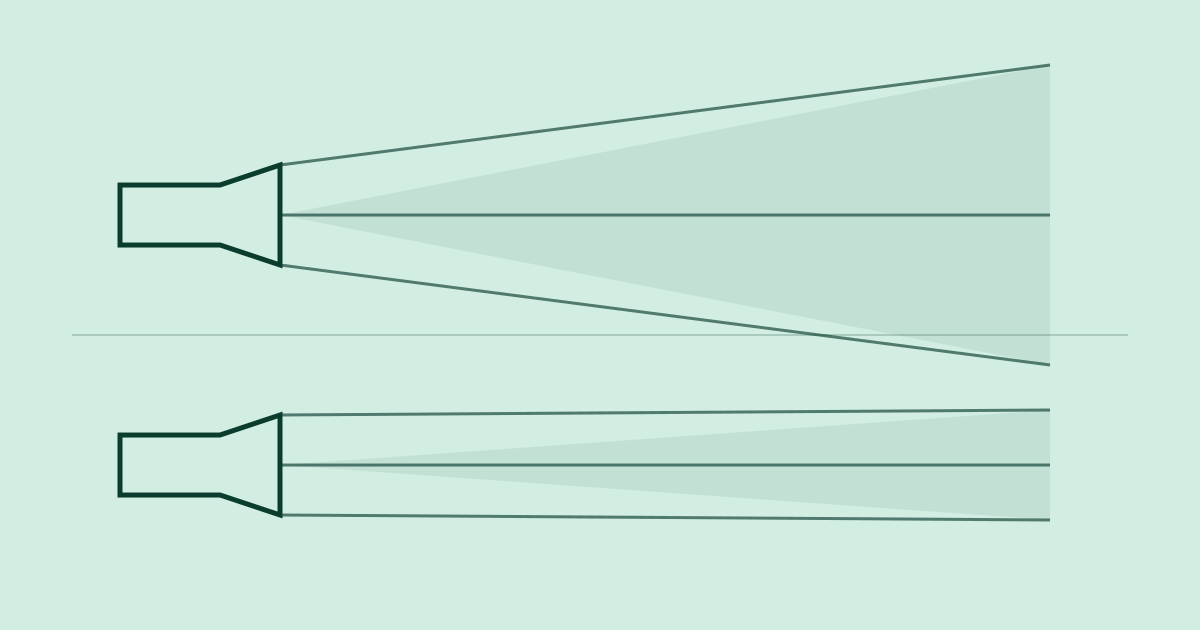
A light can put out plenty of lumens and still be wrong for the job. Lighting a cooking area, finding a path and seeing an object far ahead require different distributions of light.
Start with what you need to see
At a cooking table, you need to see the pan, utensils and stove controls without dazzling the person opposite. Looking farther along a trail is a different task. One large output number cannot tell you whether a light does either job well.
| Task | Useful characteristics | Common trade-off |
|---|---|---|
| Camp lighting and cooking | Diffused area light, stable placement, useful low settings | Broad coverage rather than distant reach |
| Walking around camp | Near-ground coverage, manageable glare, comfortable hands-free use | A tight hotspot can leave your surroundings dark |
| Searching ahead on a trail | A defined spot with enough spill to keep context | A strong centre can reduce awareness of nearby terrain |
| Vehicle-based work | Beam appropriate to the task and mounting position | A work light is not automatically suitable or legal for road driving |
Lumens describe total light output
Lumens measure luminous flux: total visible light output, weighted for the sensitivity of human vision. They do not describe its distribution. Different optics can give two lights with similar output a broad spread or a concentrated hotspot. Glare, reflections and dark edges around a bright centre also affect what you can see.
Candela and beam distance answer a different question
Candela measures luminous intensity in a direction; peak beam intensity describes the strongest part of the beam. A tighter beam can increase intensity without increasing total lumens.
Under the ANSI/NEMA FL-1 framework described by Streamlight, beam distance is calculated to the point where illumination reaches 0.25 lux. Lux describes illumination falling on a surface. That standardised endpoint helps compare lights; it is not a guarantee that you can identify a hazard, read a sign or drive safely at the advertised distance.
Flood and spot are different tools
A flood beam spreads light over nearby surroundings. A spot concentrates it for looking farther ahead. Many torches combine a hotspot with surrounding spill; assess that balance rather than treating “flood” and “spot” as fixed categories.
The brightest mode may not last
A maximum-output mode may step down as the light heats up or the battery discharges. Thermal regulation can be intentional, but initial output is not sustained output. For a whole evening at camp, a useful steady setting matters more than a brief peak.
Look for a runtime graph and the manufacturer's measurement conditions. Check the brightness available over the period you intend to use it—not just the duration printed next to the highest mode.
Light choice for camping and overlanding
A dimmable lantern placed below eye level can serve the table; a headlamp frees your hands when checking pegs or carrying equipment. Aim light at the work, not across other campers' faces or toward wildlife.
For overlanding, separate campsite and recovery-work lighting from driving lights. Road use brings mounting, aiming, electrical and legal requirements; confirm those with an appropriate installer or authority. An advertised beam distance is not a safe driving distance.
Sources and further reading
Streamlight: ANSI/NEMA FL-1 standard explanation defines lumens, peak beam intensity and the 0.25-lux endpoint. The task comparisons are Kilele's interpretation, not tests of the lights in the catalogue.
Specifications vary by manufacturer and product. Check the maker's current documentation before you buy or travel.