
Watt-Hours vs Amp-Hours: Stop Comparing Batteries the Wrong Way
The same amp-hour figure can hide very different amounts of energy. Put voltage back into the comparison, then ask what reaches your equipment.
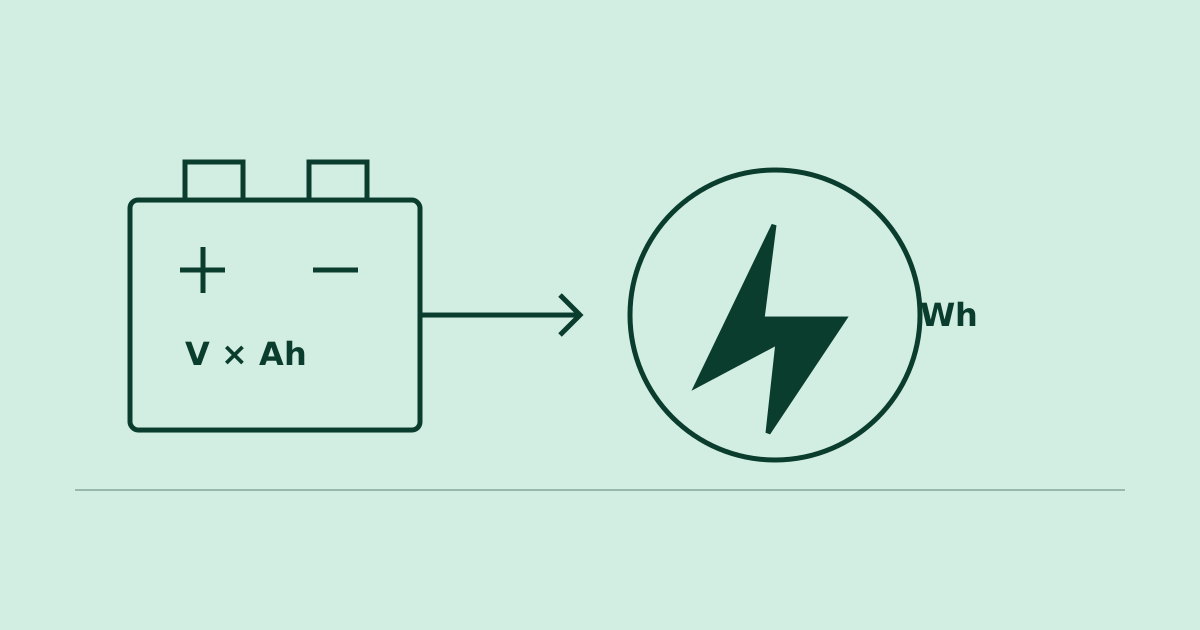
Two batteries can both say “100 Ah” and still store very different amounts of energy. If you do not also know their voltage, you are missing half the comparison.
For two nights away with a fridge, camp lights and phone charging, the useful question is how much energy you need between charging opportunities. Start there—not with the largest Ah number on the box.
Amp-hours measure charge, not energy
An amp measures electrical current. Amp-hours (Ah) describe electrical charge: current multiplied by time. A 100 Ah rating depends on the test's discharge rate, temperature and cut-off voltage; it does not promise 100 amps for an hour in any conditions.
Milliamp-hours (mAh) are the same quantity in a smaller unit. Divide by 1,000 to convert mAh to Ah. The large mAh number on a power bank may refer to its internal cells, not the voltage delivered through its USB socket. Comparing that number directly with a vehicle battery is not useful.
Watt-hours put voltage back into the picture
Watts (W) measure power: the rate at which energy is delivered or consumed. Watt-hours (Wh) measure an amount of energy. For a nominal battery comparison, use:
Use the manufacturer's Wh figure when available, and establish whether it describes stored energy or measured output energy.
The same amp-hours, different energy
The following are hypothetical arithmetic examples, not specifications for products in the Kilele catalogue.
| Example | Nominal voltage | Charge rating | Calculated nominal energy |
|---|---|---|---|
| Battery A | 12 V | 100 Ah | 12 × 100 = 1,200 Wh |
| Battery B | 24 V | 100 Ah | 24 × 100 = 2,400 Wh |
Battery B has twice the calculated nominal energy, even though the Ah figures match. That does not mean it can replace Battery A: the connected equipment, charger and protection system must all be compatible with the system voltage.
Stored energy is not usable energy
A power station also powers its own electronics and, when you use AC, an inverter. Conversion losses and battery-management limits reduce the energy that reaches your appliance. Look for documented output-energy tests rather than assuming a fixed efficiency percentage.
For a rough runtime estimate, divide usable Wh by average load watts. A fridge cycles on and off, so its peak wattage is a poor basis for estimating a whole weekend. Measuring its energy use over a representative day gives you a better starting point.
What to compare before a camping trip
- Find nominal Wh, or both nominal voltage and Ah.
- Check continuous output power and any start-up surge requirement. Having enough Wh does not mean the inverter can start every appliance.
- Look for output-energy or runtime tests that state the load and conditions.
- Compare chemistry, allowed temperatures, warranty and charging options.
- Work out how you will recharge between nights, not just how much you can carry.
Battery chemistry affects weight, ageing and charging constraints. A bigger Wh figure does not settle those trade-offs. For repeated days away from mains power, energy replacement is part of the same decision.
Sources and further reading
Victron Energy: Lithium Smart Battery technical data lists voltage, Ah and Wh together, with temperature-dependent capacity. Battery University / Cadex: Types of Lithium-ion explains chemistry trade-offs. The worked examples are hypothetical; the buying judgement is Kilele's interpretation.
Specifications vary by manufacturer and product. Check the maker's current documentation before you buy or travel.