
Roof Load Ratings: Dynamic vs Static Weight
Moving and parked loads are different conditions. Your vehicle, rack, mounts and tent all matter—and a higher rack rating cannot override the vehicle.
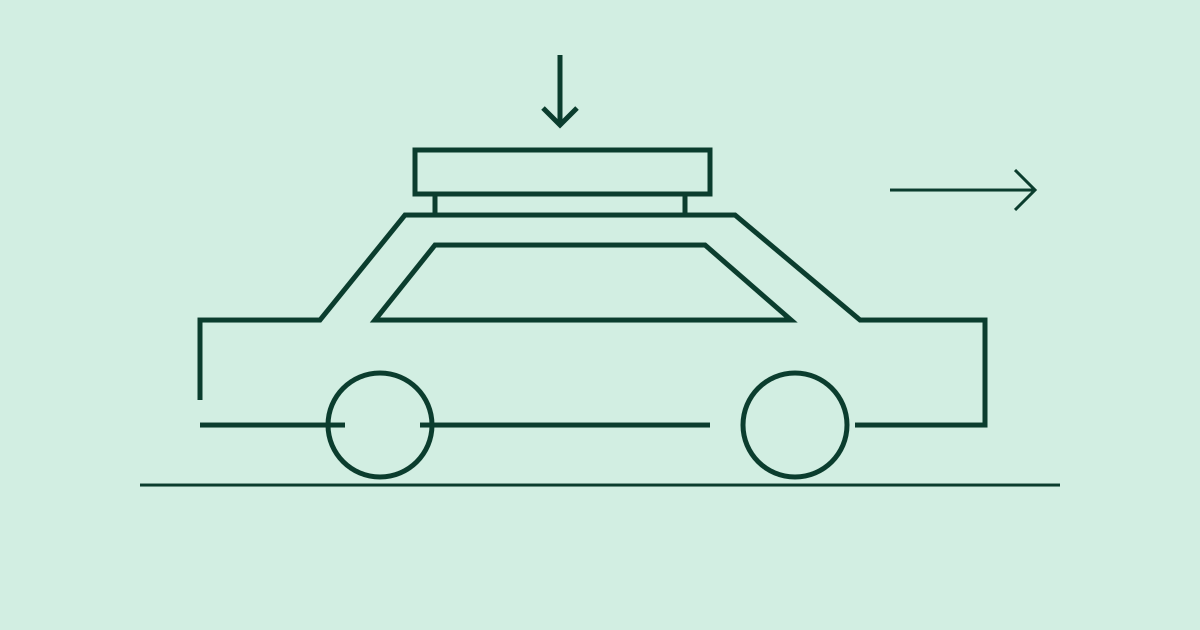
The tent may be the biggest item on the roof, but it is not the whole load. The rack, mounts, solar panel and gear left inside the tent travel with it. Before asking how many people can sleep upstairs, work out what the vehicle carries on the road.
Dynamic means the vehicle is moving
The dynamic roof-load rating concerns the load carried while driving. Braking, cornering, bumps and vibration introduce forces that a parked installation does not experience in the same way. Added roof weight also changes the vehicle’s centre of gravity and handling.
Use the manufacturer's specification for your exact vehicle and roof configuration—not a similar model or another owner's setup.
Static means the vehicle is stationary
A static rating concerns stationary use. It can be higher because braking, cornering and road impacts are no longer part of that condition. That does not give you a universal multiplier: stationary roof-tent use needs explicit approval for the vehicle and installed system.
Some tent designs share loads between their base and ladder. Follow the exact tent's installation requirements; do not count the ladder as an increase in the vehicle's permitted roof load.
The rack rating does not override the vehicle rating
A higher-capacity aftermarket rack does not raise the vehicle roof's rating. Bars, feet, factory rails, adapters and the tent can impose additional limits or restrictions.
Read what each rating includes. The vehicle's roof-load allowance normally has to cover the mounted equipment as well as its cargo; a rack's stated payload may be defined differently. Leaving out the rack's own weight can make an apparently comfortable calculation wrong.
A load calculation that includes the whole setup
These weights are purely hypothetical arithmetic inputs—not measurements, product specifications or a recommended installation.
| Item | Assumed mass |
|---|---|
| Rack and mounting hardware | 15 kg |
| Closed roof tent | 60 kg |
| Mounted solar panel | 5 kg |
| Bedding left inside | 4 kg |
| Total moving load | 15 + 60 + 5 + 4 = 84 kg |
Counting only the tent would miss 24 kg in this example. The 84 kg total is a load to evaluate, not a safe allowance or a new roof rating. It must satisfy the exact vehicle, rack, mounting and accessory requirements, including any rough-road restrictions. A low enough total does not establish that a roof tent is approved.
Build the moving-load total
- Confirm that the vehicle's roof system is approved for the intended accessory.
- Check vehicle and rack limits, including restrictions for the intended roads.
- Check suitable feet, adapters, bar spacing and the tent's mounting requirements.
- Total everything that stays on the roof while driving.
- Follow the prescribed installation, cargo-securing and inspection procedure.
If the documentation is unclear
Ask the vehicle and accessory manufacturers about the exact configuration. A qualified installer can help with mounting requirements, but cannot create an approval that does not exist. If stationary occupancy cannot be confirmed, do not infer it from the moving-load limit.
Sources and further reading
Thule: How to pack safely with a roof box explains dynamic/static conditions and vehicle/accessory limits. Thule: Rooftop-tent vehicle compatibility discusses roof design and fit. These are general references; the manuals for the exact installation govern its use.
Specifications vary by manufacturer and product. Check the maker's current documentation before you buy or travel.